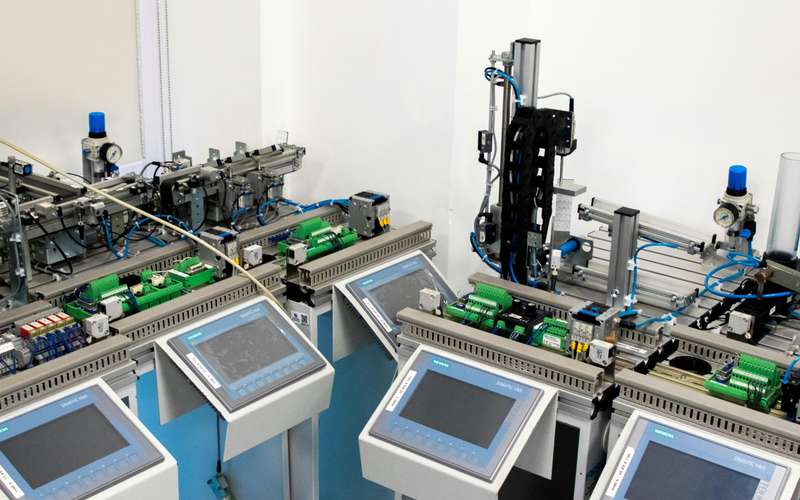
World's Best Industrial Automation Brands and Product Selection Guide
In today's production ecosystem, where the global industrial revolution has reached a new dimension with digitalization, it is an undeniable fact that businesses must possess reliable technological infrastructures to remain competitive and achieve operational excellence. Production lines, which serve as the heart of factories, can only operate flawlessly on an automation architecture that is correctly designed, equipped with engineering marvel components, and capable of continuous optimization.
In this complex technology pool filled with countless alternatives, one of the most fundamental strategies to secure the long-term success of businesses is to choose hardware that has proven itself on a global scale and been tested under harsh industrial conditions. The construction of systems that will manage production processes with zero errors, minimize downtime, and maximize return on investment (ROI) is made possible through innovative products developed by world-renowned automation brands that set the standards in the industry.
The right brand and product combination is not just a momentary purchasing decision for factories; it is a critical vision issue that determines how the production facility will perform over the coming decades, to what extent it will achieve energy efficiency, and how resilient it will be against market fluctuations. Guiding the future of technology and industry by never compromising on product quality, allocating massive budgets to research and development (R&D) activities, these pioneer brands promise businesses not only hardware strength but also an uninterrupted, sustainable, and secure production infrastructure.
The Importance of Choosing the Right Product and Brand in Automation Projects
Modern automation projects are inherently multi-layered and integrated systems that require high engineering skills and force dozens of different sensors, controllers, and mechanisms to work in perfect harmony with each other. The technological decisions made during the feasibility and installation stages of these complex systems directly and irrevocably determine the factory's future operational speed, raw material loss rates, and maintenance-repair costs.
Turning to hardware that does not meet industrial standards, whose durability and longevity are uncertain, simply because the initial and tender costs are low, causes businesses to face unpredictable massive technical problems, chronic failures, and heavy financial losses in the long run. A small motor or drive failure that could occur at a critical junction of the production line can cause the entire factory to halt for hours, deliveries to be delayed, and ultimately brand reputation—built on trust—to be severely damaged. To prevent such destructive crisis scenarios, it is of vital importance that the hardware, software, and mechanical parts used in projects belong to well-established and reliable brands.
The hardware offered by giant companies manufacturing at global standards with high safety tolerance is designed to work smoothly even under the most demanding physical operating conditions, such as intense vibration, extreme temperatures, or dusty environments. At the same time, taking into account local market dynamics and logistical supply advantages is an inseparable, strategic part of this integration process.
With a developing strong industrial infrastructure and an ever-increasing technological production volume, working with reliable distributors and partners who can respond fastest and most accurately to the complex engineering needs of businesses and create no disruptions in the spare parts supply chain is among the primary factors guaranteeing project success in the increasingly competitive Turkish automation products market.
Brands that possess a strong and fast technical service network nationwide, always maintain sufficient parts stock status, and act proactively in local engineering support processes reinforce businesses' competitive advantages in the market by increasing operational flexibility. The right brand and supplier choice also makes it possible for the established system to easily integrate into future production capacity increases and next-generation technological software updates, meaning the investment can scale flexibly without going to waste.
Things to Consider When Choosing PLCs, Drives, and Motors
If we compare a comprehensive industrial automation system to a flawlessly functioning human body, motors moving tons of weight represent the muscles of this body, drives (inverters) adjusting how much energy and speed to give to these muscles represent the nervous system, and Programmable Logic Controllers (PLCs) represent the intelligent brain that perceives and manages all these complex signals. The harmony between these three fundamental and critical components and their correct selection have a decisive, absolute impact on the general production performance and energy efficiency of the system.
The most vital elements to consider when selecting PLCs, which act as the brain, include ensuring that the microprocessor cycle speed is high enough to meet the machine's response time, that input-output (I/O) modules have an easily expandable capacity for new stations to be added in the future, and that they adapt with complete flexibility to modern industrial communication protocols (Profinet, EtherCAT, Modbus TCP, etc.).
Choosing a PLC with sufficient processing power and a strong memory infrastructure by anticipating future capacity growth targets ensures that the production line is managed smoothly for many years without experiencing bottlenecks. Additionally, a current and user-friendly software engineering interface saves maintenance teams invaluable time during new programming and debugging processes.
Drives, also known as speed control devices, are critical intermediary components that control the speed, generated torque, and acceleration-deceleration ramps of motors—which are the source of mechanical energy—with extreme precision while also providing serious energy efficiency in the system. When choosing a drive, great care must be paid to the load type required by the machine's application (such as constant torque like a conveyor belt or variable torque characteristics like fans and pumps), the physical operating conditions of the environment (appropriate IP protection class rating against factors like dust, humidity, and chemical vapor), and harmonic filtering features to prevent electrical pollution on the grid side.
A correctly sized and properly parameterized drive allows the connected motor to consume only as much energy as it needs at that exact moment, enabling massive drops to be achieved in the factory's monthly energy bills. As for electric motors, which serve as the tireless muscle power of the system, they must be carefully selected from products that perfectly match continuous operation regimes, possess high international efficiency classes (IE3, IE4), and exhibit extremely strong thermal endurance against harsh conditions.
A motor calculated incorrectly or manufactured from cheap materials will either remain inadequate in capacity and cause the process to stall, or be chosen unnecessarily large, leading to a constant waste of electrical energy. It is literally worth its weight in gold for the overall health, safety, and long-term stabilization of the system that these three main components belong to the ecosystem of the same world-renowned, reliable brand or are configured through engineering calculations to work together one hundred percent seamlessly.
Contributions of Using Original Automation Spare Parts to the System
Just as meticulous engineering success during the initial installation stage of advanced automation systems is critical, ensuring that these systems operate with the stability of day one without losing any performance or speed throughout their long life cycles is an equally critical operational issue. Heavy machinery on production lines operates continuously month after month and year after year on a 24/7 basis under intense pressure and load, high mechanical vibration, extreme ambient temperature, and continuous mechanical wear conditions.
Within this intense tempo, certain consumable materials, electromechanical switches, data-reading sensors, or pneumatic air equipment inevitably wear out and need replacement over time. Right during these critical periodic maintenance and repair processes, turning to imitation (aftermarket), compatibility-susceptible, or second-hand fatigued parts that do not carry the original manufacturer's stamp—solely to slightly reduce immediate spare parts costs—is one of the most fatal, risky, and in the long run, expensive managerial mistakes businesses and factory managers can make.
A part that is original yet unverified by engineering tests may look like it is working at the moment, but it deeply disrupts the general electromechanical harmony of the integrated system; by placing excessive electrical load or mechanical resistance on other healthy, original, and much more expensive automation hardware connected to it, it causes them to fail in a chain reaction within a very short time.
The most rational and visionary move factory managements can make for an uninterrupted, safe, and high-quality production line is to make the industrial automation spare part and product selection strategy—conducted very meticulously with professional supply consultancy—an uncompromisable, unchanging quality rule of the business. Original and proprietary spare parts are designed and produced by engineers at the global high-quality standards determined by the manufacturer brand, having passed months of fatigue and durability testing stages in factories and built to communicate and work one hundred percent flawlessly with the existing system's hardware.
When these parts are integrated into the system, they not only perform their simple tasks perfectly and without error, but they also protect the expensive main components of the system from sudden electrical fluctuations or unexpected mechanical shocks, extending the overall operating life of the entire line and machinery park by years. Original spare parts under the direct warranty of the main manufacturer brand secure the business by protecting it against all kinds of legal and financial losses in the rare event of an incompatibility or failure, while making it extremely easy for engineers to be offered fast, clear, and definitive solutions during technical support processes.
Every original part installed in the system that is licensed and approved for quality control minimizes unplanned machine downtime, keeps the occupational safety standards of operators working in the field at the highest level, and ensures that the factory seamlessly achieves its operational excellence and sustainable growth goals. An automation infrastructure supported by entirely original spare parts and correct engineering calculations under the umbrella of a proven brand is not merely an obligatory monthly expense item for industrialists; it is the most powerful and valuable technological investment guaranteeing staying one step ahead in global competition, producing cheaper, faster, and with much higher quality.
Empower your business for the future, achieve maximum efficiency in your production processes, and target zero errors with the right engineering solutions. Contact us today to learn more about our automation systems and professional consultancy services tailored to your needs.


